Eleanor Hayes · Independent Living Series
One difficult hour should not cost you the home you chose.
The plainspoken independence handbook — small preparations that keep you safe, private, and in charge, made while an ordinary day is still ordinary.
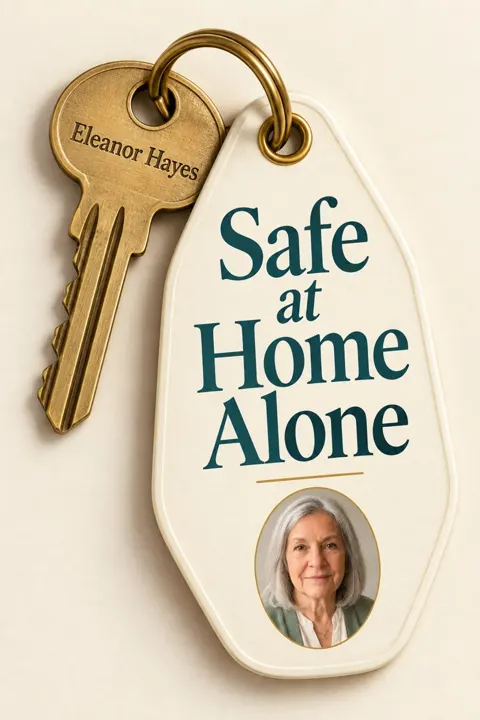 Get the handbook — $18.99
Instant PDF · 156 pages · 14 chapters · 7-day refund · Free lifetime updates
A safe plan cannot begin after the phone is out of reach.
Most independent households run well on ordinary days. The difficulty is that an emergency is rarely an ordinary day:
- A familiar route becomes harder in darkness.
- A number you know by memory disappears when you are frightened.
- The spare key exists — but nobody trustworthy knows where.
- The medication list is somewhere in a drawer. The phone is charging in another room.
- A missed morning message has no agreed next step.
None of these needs a dramatic solution. They need a decision made in advance — because one preventable incident can invite other people to make hurried decisions about your home, your care, and whether you continue living as you do now.
“The purpose of preparation is not to make you feel watched. It is to make sure one difficult hour does not take away choices you meant to keep.”
Small tasks, in the order they matter
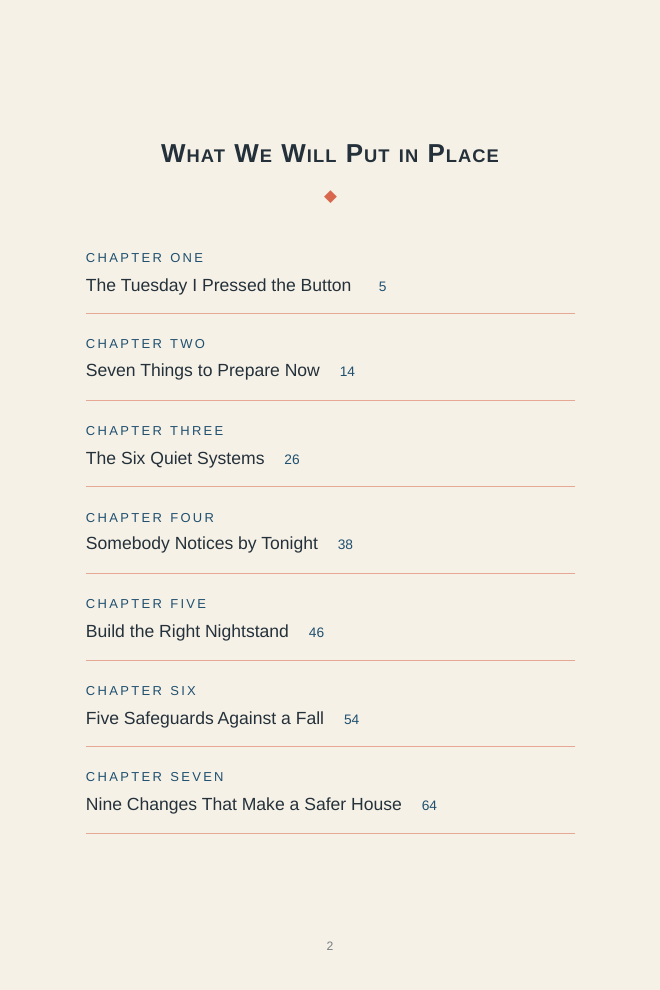
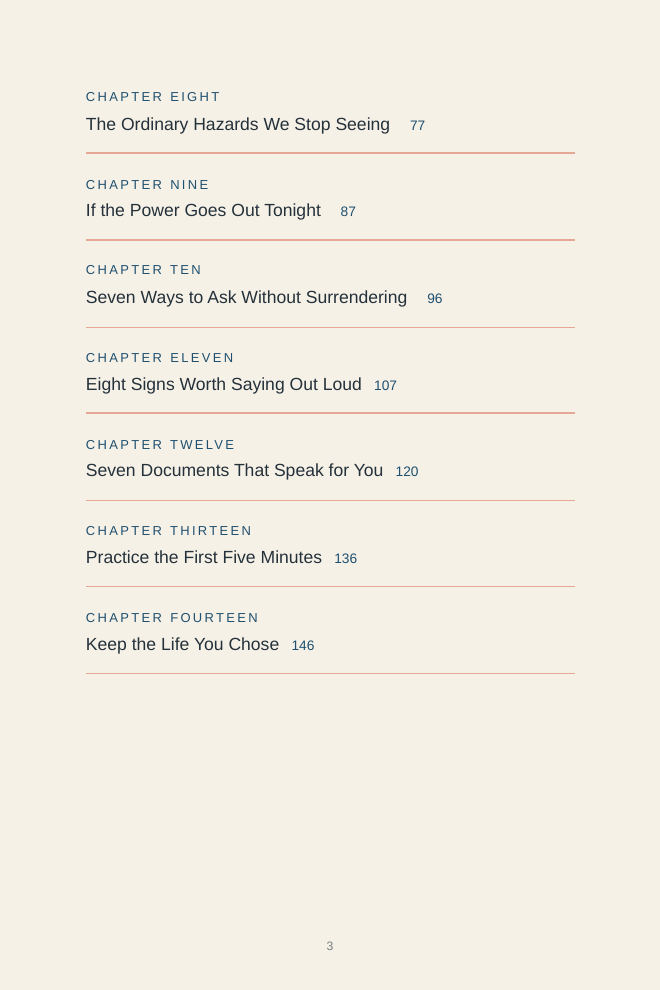
You do not have to rebuild your home or surrender your privacy. You prepare the essential arrangements, test them, and review them in manageable periods.
Test one reliable way to call for help — usable when tired, unsteady, frightened, or unable to reach the usual telephone.
Gather seven essentials into one labelled emergency station instead of scattering contacts, medical facts, keys, and supplies around the house.
Create a sixty-second daily check-in that confirms the day began as expected — without a long conversation or constant monitoring.
Arrange a safer nightstand: charged phone, light, glasses, medication information, water, sturdy footwear, a reachable way to call.
Clear the walking routes you use before breakfast — weak lighting, loose rugs, awkward cords, furniture that narrows the path.
Apply five safeguards against a fall — and practice what to do afterward, so the plan never depends on strength or perfect memory.
Make nine modest household changes, low-cost and permanent, for lighting, storage, bathrooms, stairs, cords, locks, emergency information.
Follow the exact sequence for a nighttime power outage — before moving through a dark room, opening the refrigerator, or draining the phone.
Ask for one particular form of help — information, a ride, a repair, a second pair of hands — without handing over the rest.
Recognize eight changes worth reporting, and the difference between emergency services, a prompt clinician call, and useful notes.
Organize seven categories of documents so essential information can be found without exposing private records.
Complete the sixty-minute household review: calls, contacts, supplies, check-ins, safeguards, documents, and the first five minutes of an emergency.
Plain pages, made to be used and marked
A finished 156-page handbook — not a short collection of general reminders. Quantities, placements, and short sequences replace vague advice, and every system is one you can actually check. Print the pages you want beside the place they'll be needed.
Meet Eleanor
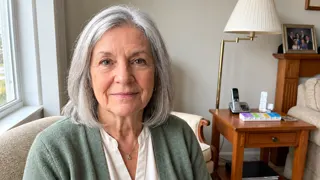
“I wrote this for the person who wants useful help without being treated as helpless.”
A household plan should be calm enough to read on an ordinary Tuesday and simple enough to use on a very bad day. This handbook does not assume living alone is a problem to be solved — it treats independence as something worth protecting with modest, practical systems. — Eleanor Hayes
Is it written for you?
This book is for you if
- You live alone and want preparation without constant monitoring.
- You want a check-in that respects your privacy.
- You prefer specific steps to general safety advice.
- You want to ask for limited help while keeping control of the larger decisions.
- You're helping a family member prepare without taking over.
This book is not
- Medical diagnosis or individualized medical advice.
- Legal advice or a substitute for lawful local forms.
- A frightening catalogue of everything that could go wrong.
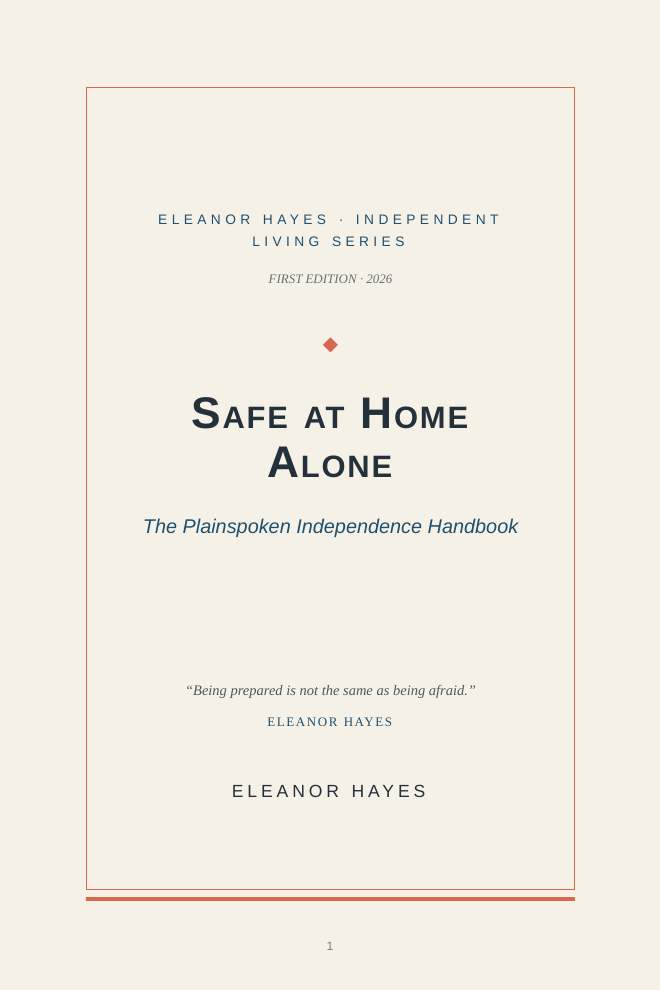
Safe at Home Alone
- The complete 156-page PDF, all 14 chapters
- Read on any device — print selected pages for the nightstand or emergency station
- Every system passes the bad-day test: it must work when you're tired, unsteady, or frightened
- Free lifetime updates to this edition
$18.99
Get instant accessOne-time purchase. No subscription. 7-day refund period.
Questions
What format is it?
Instant PDF access. Read it on any device, or print the pages you want near the nightstand, emergency station, or front door.
Is this medical or legal advice?
No. It is a set of practical household arrangements. It does not replace your clinician, your local forms, or emergency services.
I'm helping a parent prepare. Is this for us?
Yes — it is written so a family member can help without taking over. The arrangements keep authority with the person whose home it is.
Can I get a refund?
Yes — 7-day refund period, handled through Gumroad.
Do I get future updates?
Yes. Lifetime updates to this edition are included free.